Why are Kidney Stones so Painful?
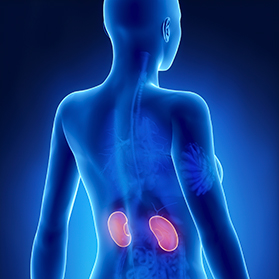
If you’re questioning whether you’ve ever passed a kidney stone, chances are, you haven’t. While occasionally a kidney stone will present with only mild discomfort, most people describe the pain as excruciating. Some women claim it’s worse than childbirth.
Why is that?
A kidney stone is a solid mass made up of tiny crystals. One or more stones can be in the kidney or the ureter at the same time. “It’s not the stone sneaking down the ureter [that causes the pain] as much as it is the blocking,” Robert Rechtin MD, of Group Health, explains. “The stones are irregularly shaped, so as they’re moving down the ureter, the ability of the urine to flow by it varies, so if it’s partially blocked or completely blocked off, the pain is excruciating.”
In contrast, if the urine can go right by the stone and get into the bladder, there’s minimal pain, which means the severity of the pain could vary from hour to hour.
- Related: Tips for Preventing Kidney Stones
Are Certain People Predisposed to Developing Kidney Stones?
Dr. Rechtin says there is no known genetic factor, but kidney stones do tend to run in families.
Also, those who have had gastric bypass surgery tend to excrete more urinary oxalate because these patients tend to absorb less calcium from their gastrointestinal (GI) tract, which may put them at an increased risk for having oxalate stones.
Ways to Prevent Kidney Stones
Most kidney stones are made of calcium – usually calcium oxalate (a chemical compound that forms envelope-shaped crystals). Less commonly, kidney stones are composed of uric acid. In terms of what causes the buildup, Dr. Rechtin says “No one really knows what happens.” However, “it’s probably related to acidity. Acidic urine predisposes the formation of the stones and that’s one of the reasons it’s recommended to not overindulge in vitamin C – to limit yourself to about 300mg a day total.”
Other ways to prevent kidney stones:
- Drink plenty of fluids (about six to eight glasses of water per day) to produce enough urine and to dilute the concentration of acid.
- Follow a diet low in oxalate, which is present in certain foods like spinach as well as vitamin C supplements.
- Take certain medications – like potassium citrate – that help break down and remove the material that is causing the stone.
How are Kidney Stones Diagnosed?
First, your healthcare provider will take a urine sample to look for blood. From there, your doctor will likely recommend a computed tomography (CT) scan without contrast.
While the amount of time it will take for the stone to pass varies, as long as the stone is tolerable, your doctor will tell you to drink 12 ounces of fluid per hour while you're awake to help the stone pass.