17 Apr 2025
Video
- Community & News
- Conditions & Care
- Orthopedics
- Patient Stories
- Service Line
- Treatments
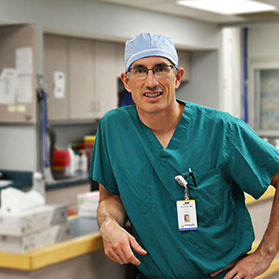
Whether you’re an avid athlete, casual gardener, or simply doing an everyday task, many people experience shoulder pain at some point. David Taylor MD, an orthopedic surgeon at the TriHealth Orthopedic & Spine Institute, says the shoulder has a tremendous range of motion but minimal stability, and will reliably break down on you as you age.
One method for treating shoulder discomfort is shoulder arthroscopy.
Shoulder arthroscopy is a procedure where a tiny fiber optic camera (arthroscope) is used to examine tissue inside and around your shoulder joint. Once the area of repair is identified, surgical instruments are used and inserted through small holes (portals) in your skin.
Dr. Taylor says techniques have evolved over the past ten years, allowing for easy repair of many shoulder ailments, including:
“The benefit of the arthroscopy is you can see everything inside the joint when you’re in there,” Dr. Taylor explains. “The visualization is much better and you can find unexpected pathologies or things that you didn’t know were there, and correct those at the same time.”
“The number one complaint I hear is patients can’t sleep due to pain that keeps them awake all night when they roll over onto their affected shoulder,” Dr. Taylor says.
Pain associated with reaching during overhead activities, reaching to the back seat of your car, or with overuse, are all symptoms that can result in a visit with your doctor.
Additional symptoms include:
Images taken during the procedure to capture the work are given to the patient, allowing him or her to see the work that was performed. “Not only is it an excellent souvenir of the operation, but the pictures serve as a great graphic record of what we saw in that surgery,” Dr. Taylor explains. “If they ever leave town, they’ll have an excellent piece of medical information they can give to their next orthopedic surgeon, should it become necessary.”
Typical recovery following the procedure is anywhere from one to six months, depending on the amount of repair. Returning to physical activity depends on what your surgery involved, but allow one week to several months.
*All providers quoted in this article were employed by TriHealth at the time of publication