Symptoms and Risk Factors
What is a hernia?
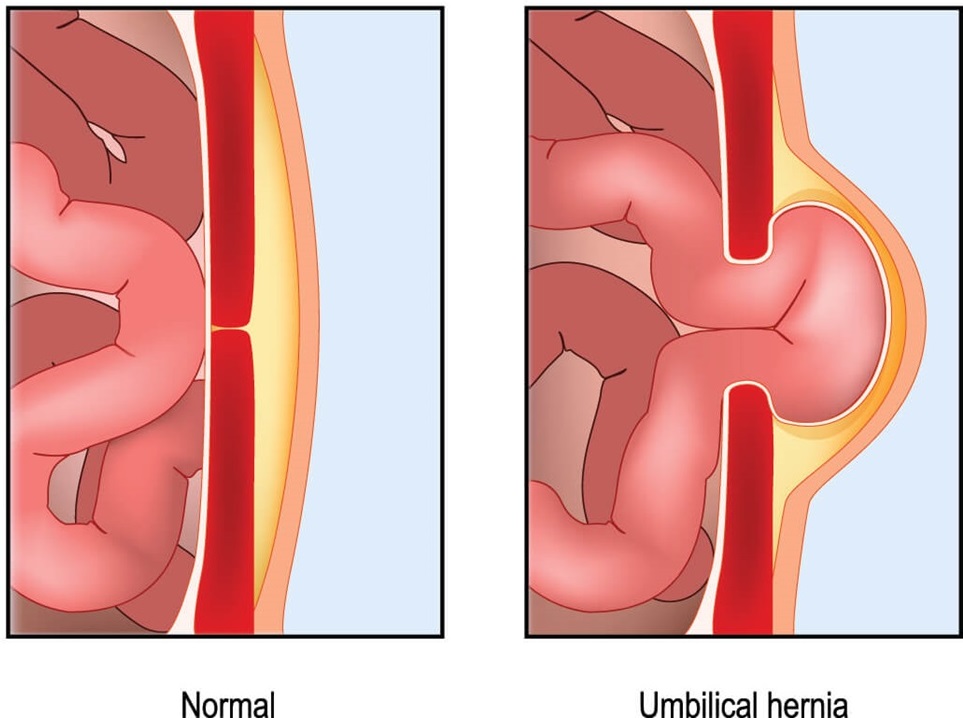
A hernia is a weakness or breakdown of the muscle wall of the abdomen or diaphragm. Abdominal structures such as small intestine can protrude through these areas of weakness or breakdown. This can cause pain and abdominal discomfort, but not always. Ultimately, the situation can lead to incarceration (tissue being stuck in the hernia) or even strangulation (the cutting off of the blood supply of the tissue protruding through the abdominal wall). This complication oftentimes can lead to emergent surgery.
What caused my hernia?
Hernias are either caused by a genetic weakness, a previous injury to the abdominal wall (like an incision), or both. The week areas can be made worse or caused to break down quicker with environmental forces like increased abdominal fat, smoking, uncontrolled diabetes, COPD, and other chronic disease processes. Increased abdominal pressure plus repetitive motion can cause tissue break down and cause defects to occur earlier in life or be larger and more complicated.
Symptoms and Diagnosis of a Hernia
The symptoms of a hernia often mimic other conditions. Symptoms can include abdominal pain, bluge in the abdomen or groin, constipation, nausea, or pain that worsens with activity. To identify a sports hernia, your healthcare provider will begin by reviewing the mechanism of injury and conducting a physical examination. This typically includes:
- Inspection and Palpation: Assessing for localized tenderness or swelling
- Range of Motion and Strength Testing: Evaluating functional limitations
Because the symptoms are similar to other injuries, your provider may also order diagnostic imaging, including:
- MRI: Most effective for identifying soft tissue injuries
- Ultrasound or CT Scan: Used to evaluate soft tissues and rule out other issues
- X-rays: To assess for bone involvement or joint abnormalities
Hernia Risk Factors
- Age 50 or older - muscles become weaker as you age
- Birth defects
- Cancer
- Chronic constipation or straining
- Chronic coughing
- Improper lifting technique
- Infection
- Muscle weakness
- Obesity - increased weight places pressure on abdominal muscle
- Pregnancy - About 1 in 2,000 women develop a hernia during pregnancy
- Previous abdominal surgery - the site at which you had an abdominal surgery in the past may create some weakness in the muscle. The chances of the weakness or inadequate healing increase if you are a smoker, have diabetes or developed a surgical wound infection.
- Smoking/unhealthy lifestyle
- Trauma or stress injury
- Weakened abdominal muscles from other conditions