Athletic Pubalgia (Sports Hernia)
What Is Athletic Pubalgia (Sports Hernia)?
Athletic pubalgia, commonly referred to as a sports hernia, is a condition that causes chronic groin pain and affects athletes involved in sports that require twisting, turning, and sudden changes in direction. Despite the name, it is not a true hernia. Instead, it involves tears or strains in the soft tissues—typically tendons or muscles—located in the lower abdominal wall or around the pubic bone.
Although the symptoms are similar, the pain and pressure from athletic Pubalgia is caused by torn tendons that attach to the pelvis instead of an abdominal muscle tear or separation and protrusion of abdominal organs or other abdominal tissue. When your abdominal muscles (rectus abdominis and obliques) contract simultaneously with your adductor longus muscle (leg), they create opposing forces on your pubic bone. Since the adductor muscles are naturally stronger causing the weaker abdominal muscles to tear. This internal conflict occurs most frequently during explosive twisting and turning movements common in sports like soccer, hockey, and tennis.
The injury affects athletes at every level—from weekend warriors to elite professionals—and creates a distinctive pattern of pain that worsens with activity and temporarily improves with rest.
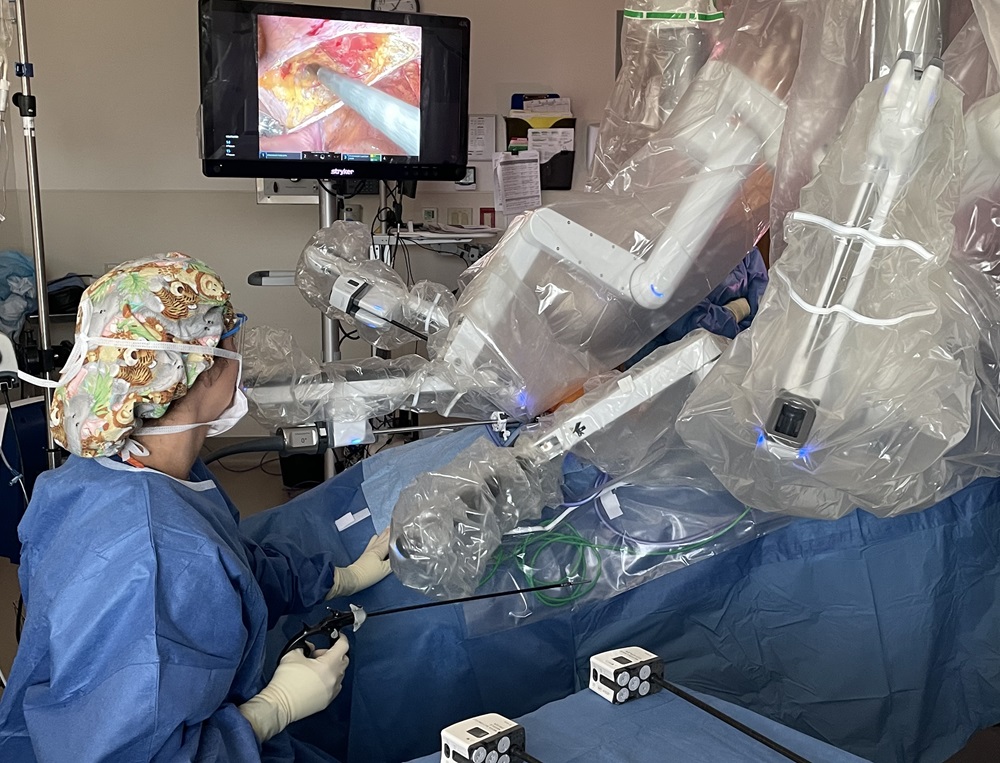
Minimally Invasive Robotic Surgical Repair
When to Seek Medical Help
If you experience ongoing groin pain that worsens with activity and does not improve with rest, consult a healthcare provider. Early diagnosis and treatment help prevent complications and support a safe return to activity.
Additional Notes for Patients
- Not all groin pain is caused by sports hernias—other conditions must be ruled out.
- Always warm up before exercise and maintain proper technique.
- Pain is a signal—don’t push through it.
- Low-impact exercises such as walking, swimming, or cycling are often safe with approval.